|

|
CPEO's Brownfields Assistance Project provides technical
assistance and training to environmental justice and other communities
where Brownfields activities are planned or underway, and we
communicate what we learn to the full range of Brownfields
constituencies. This work is based upon the premise that communities
where Brownfields are located can play a constructive role in
Brownfields revitalization—if they organize—and in turn, those
Brownfields projects will better serve the communities' interests.
CPEO publishes its free Internet newsgroup, the Brownfields Internet Forum (BIF);
organizes workshops throughout the United States; and convenes the
Enviornmental Justice/Community Caucus at U.S. EPA's annual national
Brownfields conference. CPEO staff members visit Brownfields
communities, write research papers, and speak at a variety of
conferences on Brownfields, community involvement, and vapor intrusion.
Though CPEO's work is designed primarily to serve
grassroots communities, our services—particularly the Brownfields
Internet Forum—are valued by the full range of Brownfields
stakeholders.
|
|
|
|
-
Lenny Siegel [PDF, 8 pages]
October, 2013
-
Lenny Siegel [PDF, 5 pages]
January, 2011
-
Produced in cooperation with the American Planning Association [PDF, 116 pages]
December 2010
-
Lenny Siegel [PDF, 13 pages]
October 2010
-
Lenny Siegel [PDF, 7 pages]
January, 2008
-
Robert Hersh (DOC, 5 pages]
December 2007
-
Lenny Siegel [PDF, 11 pages]
October 2007
-
Lenny Siegel [PDF, 3 pages]
September, 2007
-
Lenny Siegel [PDF, 3 pages]
August, 2007
-
Lenny Siegel and Peter Meyer [PDF, 5 pages]
May, 2007
-
Lenny Siegel [DOC, 2 pages]
June, 2006
-
Lenny Siegel [DOC, 5 pages]
April, 2005
-
Robert Hersh [PDF, 14 pages]
March, 2005
-
Lenny Siegel
September, 2001
-
Lenny Siegel
December 18, 1998
-
Lenny Siegel
September 1998
-
Luat Vuong
August, 1988
-
Lenny Siegel [PDF, 2 pages]
November, 2011
-
Lenny Siegel [PDF, 3 pages]
April, 2011
-
[PDF, 3 pages]
April 3-5, 2011
-
Lenny Siegel [PDF, 3 pages]
December, 2009
-
CPEO [PDF, 7 pages]
December, 2006
-
Lenny Siegel [Word, 2 pages]
November, 2006
-
CPEO [Word, 4 pages]
November, 2006
-
Lenny Siegel [Word, 4 pages]
November, 2005
-
Robert Hersh [Word, 7 pages]
December, 2004
-
CPEO [Word, 5 pages]
December, 2003
-
CPEO [Word, 4 pages]
2002
-
National Brownfields Environmental Justice/Community Caucus:
October, 1999
-
Lenny Siegel [PDF, 3 pages]
August 13, 2007
-
Lenny Siegel [Word, 4 pages]
May18, 2006
-
Lenny Siegel [Word, 2 pages]
May 17, 2006
-
Lenny Siegel [Word, 9 pages]
February 24, 2006
-
a CPEO Brownfields Brief by Lenny Siegel [PDF, 4 pages]
October, 2005
-
Lenny Siegel [PDF, 17 pages]
September, 2024
-
Lenny Siegel [Recording, 1 hour, 30 minutes]
March 9, 2023
-
Peter Strauss [PDF, 22 pages]
October, 2022
-
Lenny Siegel [PDF, 8 pages]
September, 2021
-
Lenny Siegel [PDF, 8 pages]
June, 2020
-
Peter Strauss [PDF, 27 pages]
June, 2020
-
Lenny Siegel [PDF, 3 pages]
June, 2020
-
Lenny Siegel [PDF, 7 pages]
September, 2017
-
Lenny Siegel [PDF, 15 pages]
September, 2017
-
Lenny Siegel [PDF, 9 pages]
May, 2017
-
Peter Strauss [PDF, 3 pages]
February, 2017
-
Lenny Siegel [PDF, 10 pages]
December, 2016
-
Lenny Siegel [PDF, 21 pages]
December, 2016
-
Lenny Siegel [PDF, 8 pages]
October, 2016
-
Lenny Siegel [PDF, 6 pages]
April, 2016
-
Lenny Siegel [PDF, 20 pages]
April, 2016
-
Lenny Siegel [PDF, 3 pages]
January, 2016
-
Lenny Siegel [PDF, 9 pages]
December, 2015
-
Lenny Siegel [PDF, 27 pages]
November, 2015
-
Lenny Siegel [PDF, 10 pages]
October, 2015
-
Lenny Siegel [PDF, 7 pages]
September, 2015
-
Lenny Siegel [PDF, 17 pages]
August, 2015
-
Lenny Siegel [PDF, 8 pages]
August, 2015
-
Lenny Siegel [PDF, 10 pages]
June, 2015
-
Peter Strauss [PDF, 7 pages]
March 6, 2015
-
Lenny Siegel [PDF, 13 pages]
February, 2015
-
Lenny Siegel [PDF, 4 pages]
May, 2014
-
Lenny Siegel [PDF, 3 pages]
May, 2014
-
Lenny Siegel [PDF, 3 pages]
May, 2014
-
Lenny Siegel [PDF, 2 pages]
March 25, 2014
-
Lenny Siegel [PDF, 5 pages]
November, 2013
-
Lenny Siegel [PDF, 5 pages]
October, 2013
-
Lenny Siegel [PDF, 2 pages]
July 23, 2013
-
Lenny Siegel [PDF, 1 page]
July 12, 2013
-
Lenny Siegel [PDF, 5 pages]
June 21, 2013
-
Lenny Siegel [PDF, 3 pages]
March 19, 2013
-
Lenny Siegel [PDF, 4 pages]
February, 2013
-
Lenny Siegel [PDF, 5 pages]
January, 2013
-
Michael Heimbinder [HTML including interactive map]
November, 2012
-
Lenny Siegel [PDF, 5 pages]
August, 2012
-
Lenny Siegel [PDF, 2 pages]
June, 2012
-
Lenny Siegel and Peter Strauss [PDF, 5 pages]
May 29, 2012
-
Lenny Siegel [PDF, 3 pages]
March, 2012
-
Lenny Siegel [PDF, 11 pages]
November, 2011
-
Peter Strauss and Lenny Siegel [PDF, pages]
November 7, 2011
-
Lenny Siegel [PDF, 6 pages]
May 13, 2011
-
Peter Strauss [PDF, 8 PGS]
April, 2011
-
Lenny Siegel [PDF, 4 pages]
April 13, 2011
-
Lenny Siegel [PDF, 2 pages]
April, 2011
-
Lenny Siegel [PDF, 5 pages]
March, 2011
-
Lenny Siegel [PDF, 4 pages]
February, 2011
-
Lenny Siegel [PDF, 5 pages]
January 13, 2011
-
Lenny Siegel [PDF, 4 pages]
December, 2010
-
Lenny Siegel [PDF, 2 pages]
June, 2010
-
Lenny Siegel [PDF, 5 pages]
March, 2010
-
Lenny Siegel [PDF, 9 pages]
November, 2009
-
Lenny Siegel and Peter Strausee [PDF, 1 page]
November 7, 2009
-
Lenny Siegel and Peter Strauss [PDF, 6 pages]
October 23, 2009
-
Lenny Siegel [PDF, 5 pages]
October, 2009
-
Lenny Siegel [PDF, 6 pages]
August, 2009
-
Peter Strauss and Lenny Siegel [PDF, 20 pages]
June 12, 2009
-
Lenny Siegel [PDF, 5 pages]
March, 2009
-
Lenny Siegel [PDF, 6 pages]
February, 2009
-
Lenny Siegel [PDF, 8 pages]
February, 2009
-
Lenny Siegel [PDF, 5 pages]
February, 2009
-
Lenny Siegel [PDF, 8 pages]
June 12, 2008
-
Lenny Siegel [PDF, 11 pages]
March 12, 2008
-
Lenny Siegel [PDF, 3 pages]
November, 2007
-
Lenny Siegel & Peter Strauss [PDF, 8 pages]
October 15, 2007
-
Lenny Siegel [PDF, 8 pages]
September, 2007
-
Lenny Siegel [PDF, 6 pages]
August, 2007
-
Lenny Siegel [PDF, 5 pages]
June, 2007
-
Lenny Siegel [PDF, 3 pages]
April, 2007
-
Lenny Siegel [PDF, 5 pages]
February, 2007
-
Lenny Siegel [Word, 3 pages]
November, 2006
-
Lenny Siegel [Word, 3 pages]
August 3, 2006
-
Lenny Siegel [Word, 5 pages]
August, 2006
-
Lenny Siegel [Word, 5 pages]
June, 2006
-
Lenny Siegel [Word, 4 pages]
March 15, 2006
-
a CPEO Brownfields Brief by Lenny Siegel [PDF, 6 pages]
August, 2005
-
Prepared by Lenny Siegel [Word, 2 pages]
June, 2005
div>
-
Lenny Siegel [Word, 3 pages]
April, 2005
Lenny Siegel [Word, 5 pages]
November, 2004
-
Prepared by Lenny Siegel [Word, 2 pages]
September, 2004
-
Lenny Siegel
September 20, 2004
-
Lenny Siegel
January, 2004
-
Lenny Siegel
October, 2003
-
Peter Strauss
August 30, 1998
-
Peter Strauss
August 30, 1998
by Lenny Siegel
September, 2024
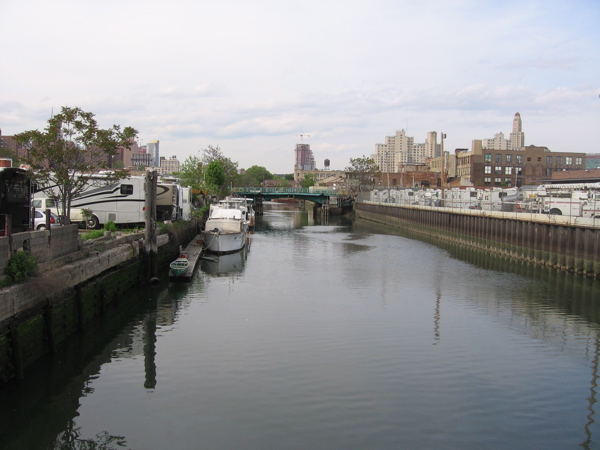
The area around Brooklyn's Gowanus Canal is experiencing an impressive boom in residential construction. However, as thousands of new housing units undergo construction near the Canal, underground plumes of volatile chlorinated compounds such as trichloroethylene (TCE) threaten both existing and new homes with the intrusion of toxic vapors. While the state of New York, developers, responsible parties such as National Grid, and U.S. EPA have spent a great deal of time and money investigating and addressing the contamination in both the Canal and its uplands, the current and future residents and other building occupants cannot be adequately protected until there is a comprehensive approach to the cleanup of the area.
by Lenny Siegel
September, 2021
On the surface, the plan to construct about 100 affordable apartments on the site of the San Francisco Police Credit Union (PCU) building is a solid step forward to address the Bay Area's growing housing crisis. However, beneath the surface of the Mid-Sunset property lies a toxic plume of tetrachlorethylene (PCE) vapors that poses a health threat both to current neighbors and future residents. Still, despite pleas from the neighborhood, California's Department of Toxic Substances Control (DTSC) has chosen not to require remediation of the PCE property, relying on passive mitigation to prevent exposure. DTSC's position is based upon two faulty decisions: First, it divided the plume, likely left behind by two former dry cleaning businesses, into three distinct projects. Second, it considers acceptable an excess lifetime cancer risk of up to one in ten thousand.
by Lenny Siegel
August, 2020
The three-mile-long 1,4-dioxane plume at the Gelman Sciences site in Scio Township, Washtenaw County, Michigan is unusual in that 1,4-dioxane is by far the principal contaminant of concern. There is a long history of community engagement at the Gelman site. While state regulators have provided a great deal of information and met with the community many times over the years, community activists have not had full access to data or the decision-making process, and there is widespread dissatisfaction with the limited cleanup that is underway.
by Lenny Siegel
June, 2020
by Peter Strauss
June, 2020
Mountain View, California is leading the Bay Area in building new housing. In perhaps a majority of projects, Mountain View's strategy for adding housing on previously commercial property means constructing apartments and other homes on property with underlying groundwater contamination, creating the potential for vapor intrusion. The largest, most contaminated toxic groundwater plume in the city is known as the Middlefield-Ellis-Whisman (MEW) Superfund Study Area. CPEO's consultant, Peter Strauss reviewed the safety of such construction. While he found that vapor intrusion risk is being addressed, he came up with nine recommendations to further protect building occupants.
by Lenny Siegel
June, 2020
Deletion of the JASCO Chemical Corporation site from the "Superfund" National Priorities List should not occur until current sampling shows that the original remedial action objectives have been met and until the new apartments, under construction at the site, are verified to have been designed and built to meet vapor intrusion mitigation requirements that would ensure the safety of future building occupants at the site.
by Lenny Siegel
September, 2017
The Former Marble Quarry Landfill Brownfield Cleanup Program (BCP) site in Tuckahoe, New York illustrates the inherent challenges facing New York State’s extensive program to rehabilitate contaminated brownfields sites. Remediation of the former landfill is fragmented into three parts. The hotel developer enrolled in the BCP as a volunteer is remediating its own property, but “is not responsible for investigating or remediating off-site contamination that has migrated from the BCP site, or that was disposed off-site (i.e., the remainder of the landfill).”
by Lenny Siegel
September, 2017
Madison, Wisconsin is well-known as the state capital and home of the University of Wisconsin, but it also has rich industrial history that has left behind a legacy of subsurface toxic contamination. Madison-Kipp Corporation’s Waubesa Street aluminum diecasting factory is the most visible example of the health risks associated with that contamination, and the sluggish, reluctant environmental response there provides lessons that the environmentally conscious city government may be able to apply, particularly at properties in the area where redevelopment is expected.
by Lenny Siegel
May, 2017
The Hoover Company manufactured vacuum cleaners in North Canton, Ohio, for decades, leaving behind a wealth of subsurface contamination, including tetrachloroethylene (PCE) and tri-chloroethylene (TCE). Now the current owner, under supervision from U.S. EPA’s RCRA (Resource Conservation and Recovery Act) program, is beginning a series of cleanup measures that include what is essentially the vacuum cleaning of toxic vapors from the subsurface. However, the community is being given little information about the investigation and the proposed response.
by Lenny Siegel
December, 2016
The San Gabriel Valley community of Alhambra, an inland suburb of Los Angeles, is rife with subsurface contamination, solvents such as trichloroethylene (TCE) and tetrachloroethylene (PCE) from post-World War II industrial expansion. City officials are only just beginning to become aware of the threat of vapor intrusion, and regulatory oversight is fragmented.
by Lenny Siegel
October, 2016
The 120,000 square-foot former Modine plant, in the central Missouri town of Camdenton, sits empty on a 67-acre property in a quiet, wooded residential neighborhood, but pre-1990 releases of trichloroethylene (TCE) by a former owner still threaten the residents. The Missouri Department of Natural Resources (MDNR) is currently overseeing a robust, by-the-book vapor intrusion investigation. However, reviewing site documents after my visit, I found apparent shortcomings in the response. But, after sharing my draft with the regulators, I learned that they are already addressing those issues.
by Lenny Siegel
April, 2016
Stanford University plans to build much-needed faculty housing on a former industrial parcel in the
Stanford Research Park. Despite high levels of TCE in shallow soil gas,
Stanford and the California Department of Toxic Substance Control have
decided that standard vapor mitigation systems are not needed, and that
there is no need to sample in the adjacent College Terrace neighborhood.
by Lenny Siegel
December, 2015
In Santa Clara, California a developer is proposing a massive nine-million-square-foot commercial
and residential project called City Place on 240 acres, most of
which—183 acres—is a former landfill. The developer appears willing to
spend what it takes to build a project that is not vulnerable either to
vapor intrusion or land movement, but at least in this region there is
no precedent to determine what it actually will take to make City Place
safe.
by Lenny Siegel
October, 2015
There are four schools and more than four hundred homes above the Triple Site trichloroethylene (TCE)
plume in Sunnyvale, California. Unlike Winston-Salem, North Carolina,
where news coverage triggered widespread anxiety, the Sunnyvale
community did not panic when U.S. EPA’s expanded vapor intrusion
investigation hit TV screens. EPA is addressing unacceptable TCE levels
in five school buildings and five homes, and EPA-led sampling continues
with community cooperation and support. I attribute the success of the
Triple Site program to EPA Region 9’s proactive and transparent
approach.
by Lenny Siegel
September, 2015
Endicott, New York is the birthplace of IBM. For decades “Big Blue” employed tens of thousands of
people there. But over the same period IBM released large quantities of
volatile organic compounds (VOCs) such as trichloroethylene (TCE) into
the subsurface there. Since 1979, when it first reported the release,
IBM has spent tens of millions of dollars addressing the contamination.
Off-site groundwater remediation and vapor mitigation have been
remarkably successful, but contamination in the source areas remains
high. Employees of IBM’s successors at the site are still being exposed
to low levels of TCE.
by Lenny Siegel
June, 2015
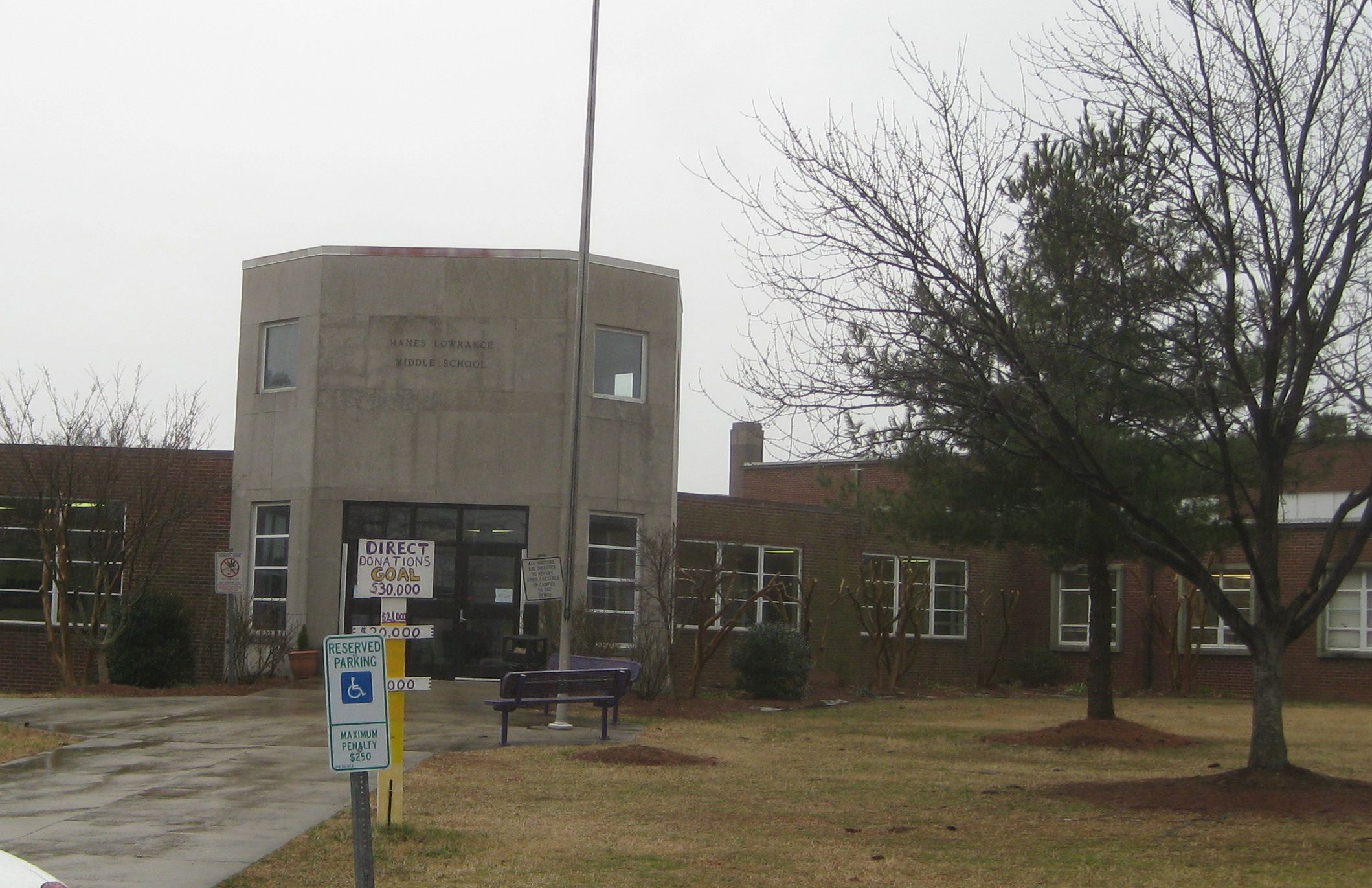
On January 24, 2015 the Winston-Salem Journal reported that the Hanes-Lowrance Middle School
Campus, in Winston-Salem, North Carolina, sat above groundwater plumes
of toxic chlorinated volatile organic compounds. The company
responsible for the contamination, situated immediately across Indiana
Avenue from the front of the school, had been addressing the
contamination source for more than a decade. The disclosure ignited a
firestorm of anxiety among parents who had no idea, until the news
report, that hazardous substances underlay the campus. On February 10
the school board voted to close the school, despite evidence that
indoor air contamination remained below North Carolina’s exposure
standard.
by Lenny Siegel
November, 2013
Four relatively recently discovered TCE hotspots in Mountain View, California’s North Whisman
neighborhood appear separate from the massive Regional Plume associated
with the MEW Superfund Study Area and Moffett Field, but studies
suggest that contamination at all four sites may come from decades-old
releases through sewer lines emanating from the MEW area, the
birthplace of the commercial semiconductor area.
by Lenny Siegel
October, 2013
The billion-dollar Jordan Downs Redevelopment Project, located in the heart of Watts in South Central
Los Angeles, could end up as a model for neighborhood revitalization in
low-to-medium density urban areas. The Housing Authority of the City of
Los Angeles (HACLA) plans to replace a 700-unit public housing project
with a sustainable urban village containing as many as 1800
mixed-income housing units, major retail stores, and recreational
facilities. HACLA and its private partners plan to build several
hundred new rental units on an adjacent 21-acre former steel factory
site. To make it safe for housing, they plan to remove at least 33,600
cubic yards of soil contaminated with lead, arsenic, and PCBs, but they
consider vapor-intrusion a non-issue, despite the presence of
unacceptable concentrations of trichloroethylene (TCE) in groundwater
and soil gas in the northeastern section of the property.
by Lenny Siegel
February, 2013
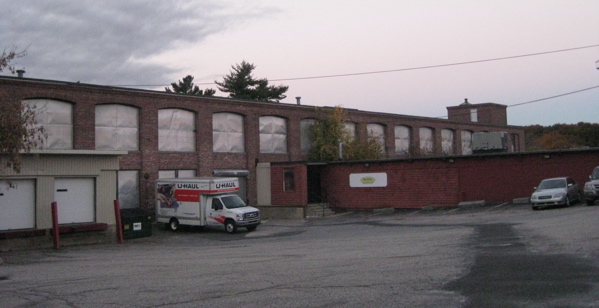
For several years, children who practiced baseball indoors and the adults who coached and watched them
were exposed to unacceptable levels of trichloroethylene (TCE) and
tetrachloroethylene (PCE) vapors at the Former Navy Yard Mill site in
Dracut, Massachusetts. Not only was the property owner’s effort to
reduce contamination inadequate, but building occupants (ballplayers,
parents, etc.) were unaware of any contamination until the facility was
closed in 2012.
by Lenny Siegel
January, 2013
Some people believe that DeLeon Springs, Florida, is the Fountain of Youth that Spanish explorer Juan
Ponce de Leon supposedly sought in the 16th Century, but today it’s the
surrounding unincorporated community that is in need of rejuvenation.
At first glance, a plume of underground petroleum contamination appears
to be preventing redevelopment. However, the challenge faced by the
DeLeon Springs Community Association, Inc. is complicated by issues
associated with the widening of U.S. Highway 17, which serves as the
community’s main thoroughfare, and the lack of modern water and sewer
utility services.
by Lenny Siegel
January, 2013
In January 2012, as the Buncombe County, North Carolina Board of Education considered adding a
$4 million high school to its administrative office building, Board
Member Lisa Baldwin discovered that the school property was on the edge
of the Square D hazardous waste site. In March the North Carolina
Department of Environment and Natural Resources (DENR) asked Square D
to conduct additional testing on the site to determine the potential
for vapor intrusion. Thus far, groundwater and soil gas sampling have
not demonstrated a risk to building occupants, but much more testing is
necessary to ensure that vapor intrusion is not and will not be a
problem.
by Lenny Siegel
September, 2012
Today, more than a dozen years after its formation, Jersey City’s Morris Canal Community Development
Corporation is on the verge of verifiable success. Its Pacific Landing
project, containing eight affordable housing units plus a new office
for the CDC, is almost completed. The new building is a testament to
the persistence of MCCDC President June Jones, its board and staff, and
their financial, development, and legal advisers. The tortuous process
of designing, funding, and winning approvals for the project has
prepared the group for larger projects that are on its horizon. It also
stands as a warning to other communities: One has to be prepared for a
continuing barrage of unforeseen obstacles to build one’s own project.
by Lenny Siegel
August, 2012
In the Spring of 2012 tenants of the 2350 Fifth Ave. State Superfund site in Harlem, New York City,
discovered that they had been exposed to unacceptable levels of
volatile organic compounds in the building, and that remediation was
underway in their workplaces without their knowledge. They organized,
bringing press coverage and an August 17, 2012 Forum sponsored by State
Sen. Bill Perkins. As a result, Sen. Perkins has proposed legislation
to expand notification and disclosure requirements and state agencies
have agreed to expand their investigation both in the building and in
nearby apartment complexes.
by Lenny Siegel
December, 2011
In Gambrills, Maryland homes and stores are being built above a former coal combustion waste
disposal site, covering up the problem and possibly preventing the
cleanup necessary to protect the area’s groundwater resources. To a
large degree, the root of the issue lies in a regulatory loophole
literally large enough to drive thousands of ash-laded trucks through.
by Robert Hersh
December, 2011
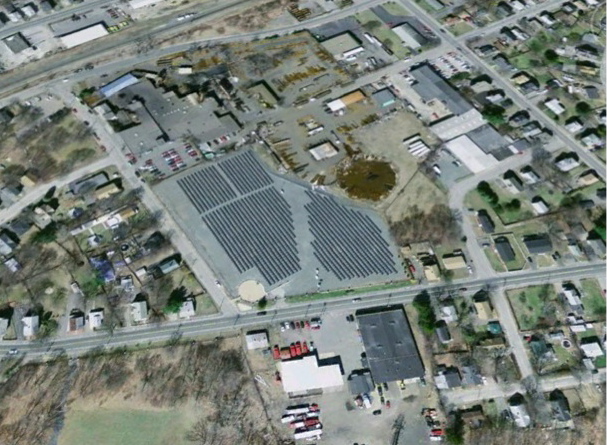
The proposed installation of solar photovoltaic arrays on the closed Amherst, Massachusetts
municipal landfill illustrates why municipalities are marketing their
landfills, why developers are targeting them for solar power, and how
impacted neighbors can delay or prevent such installations.
by Peter Strauss and Lenny Siegel
November, 2011
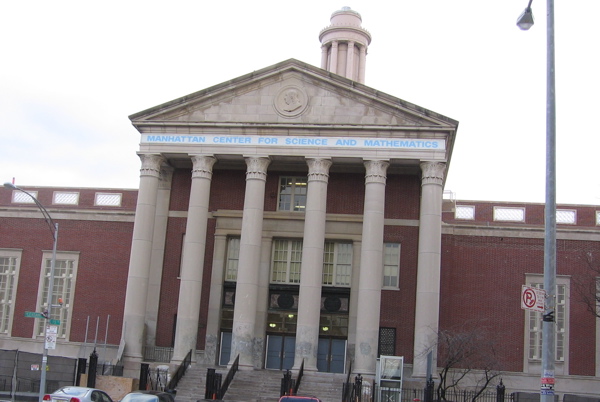
At MCSM, the need for a robust, transparent long-term remedy and management plan is particularly
important. Contaminated groundwater is only five to six feet below the
basement, where the school cafeteria and classrooms are located. The
school was built over the remnants of a Manufactured Gas Plant (MGP)
facility. These facilities were known to produce several toxic
byproducts, some of which remain under the school. Public health and
environmental protection, as well as New York law, require the
preparation of a Site Management Plan (SMP) at the same time remedies
are being selected, any time contamination is expected to remain on
site at the completion of remedial construction. Site management
includes the operation and maintenance of engineering controls,
long-term monitoring, and public notification.
by Lenny Siegel
November, 2011
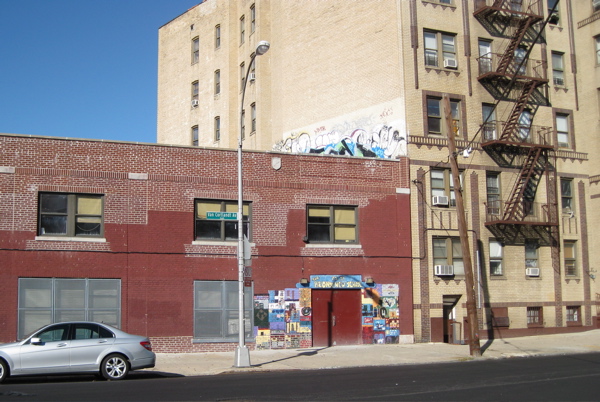
In August 2011 the New York City Department of Education (DOE) announced that it was relocating the
Bronx New School elementary school, also known as PS 51x, from its
two-decade home in a leased former factory building at 3200 Jerome
Avenue in the northern Bronx to a closed Catholic School two miles
away. It explained that sampling conducted earlier in the year had
found indoor trichloroethylene (TCE) concentrations ten times New York
State Department of Health’s (DOH’s) exposure standard. Because
students and teachers had been exposed to this cancer-causing chemical
for months after the initial test results—and probably for years—the
announcement ignited a political firestorm. Then indoor testing at the
new campus showed tetrachloroethylene (PCE) levels above both EPA
guidelines and ambient (outdoor) air. Based upon DOH’s outdated,
unprotective PCE standard, DOE declared the new New School safe, and
despite requests from parents it has announced no plans to conduct
another round of sampling in the heating season, as required by DOH
guidance.
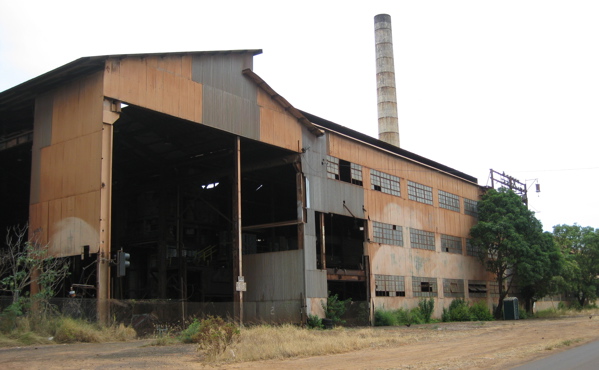
by Lenny Siegel
November, 2011
After 100 years of operations, the Kekaha Sugar Mill has for a decade stood as a contaminated blight
in the heart of the southwestern Kaua'i community of Kekaha. Residents
are questioning plans to conduct a “remediation,” near a Native
Hawai'ian charter school, that calls for no excavation or treatment of
the arsenic and dioxins in the soil. They are organizing to promote
cleanup of the area to residential standards, listing of the mill
complex on the “Superfund” National Priorities List, and rezoning to
promote neighborhood-compatible reuses.
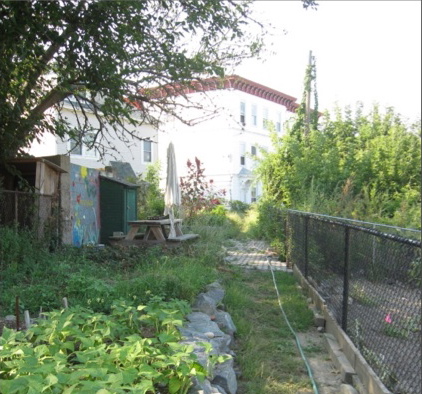
by Robert Hersh
June, 2011
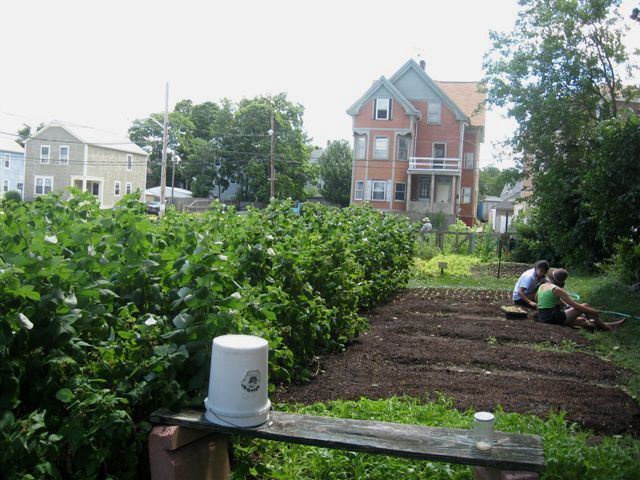
In the spring of 2010, the City of Lawrence launched a program called the “Neighborhood Community
Garden Initiative” to utilize strategically situated, city-owned
brownfields for food production in poor neighborhoods. The initiative
was the city’s response to what was happening on the ground. Residents
in low-income neighborhoods, particularly many recent Latino
immigrants, who have a tradition of gardening and running local farm
stands, were developing garden plots on Lawrence’s vacant lots and
brownfields without city authority or soil testing.
by Lenny Siegel
March, 2011
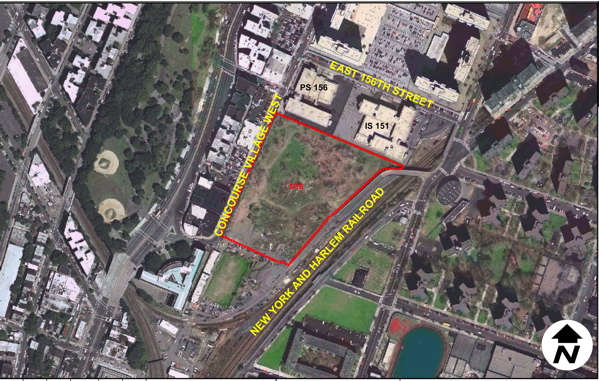
The 2350 Fifth Avenue site, between 141st Street and 142nd Street in the heart of Harlem, was an
ice cream factory, an industrial dry cleaners, a school, and then a
storage facility. It made headlines in 1997 when the school was
evacuated due to PCE vapors inside. New York State’s Proposed Remedial
Action Plan ignores the potential for vapor intrusion at the densely
populated Savoy Park apartment complex (just across 141st) proposes
half a cleanup for the building, and downplays vapor intrusion in the
Armory across 142nd.
by Mark Mitchell and Norbert Kovacs
March, 2011
The Connecticut Resources Recovery Authority landfill in Hartford ceased operations at the end of
2008. Now the Connecticut Coalition for Environmental Justice is
organizing to have solar panels placed on the capped landfill.
by Lenny Siegel
February, 2011
The two-mile long Speonk Solvent Plume on southeastern Long Island, was discovered in 2001, but
remedial action is not likely soon. Some agencies believe that
new residential developments above the plume should incorporate vapor
mitigation, but the Town of Southampton chose not to impose such
requirements.
by Lenny Siegel
December, 2010
The Birch Plaza mixed-use development in Palo Alto, California was proposed to be built above a plume of
chlorinated volatile organic compounds emanating from the Stanford
Research Park, but there has been no vapor intrusion investigation.
Despite high soil gas readings on the property, the Palo Alto City
Council approved the project, requiring only some form of notice to
project tenants and owners.
by Robert Hersh
October, 2010
The construction of photovoltaic arrays on a contaminated land in Brockton, Massachusetts, illustrates that the
availability of suitable land and local willingness to go solar are not
enough. To build solar arrays on contaminated lands, the finances have
to work. The Brockton case shows how difficult this was, but the
passage of new state legislation should make similar projects in
Massachusetts easier to consummate.
by Robert Hersh
July, 2010
For three decades, the Southside Community
Land Trust (SCLT) in Providence Rhode Island has carried on the long,
but under-recognized tradition of community gardening in the United
States. It has employed multiple strategies: the outright purchase of
brownfields and other vacant properties, partnerships with affordable
housing organizations and watershed groups, education and outreach to
promote community gardening beyond individual garden plot holders, and
organizing politically for more secure land tenure.
by Peter Strauss and Lenny Siegel
June, 2010
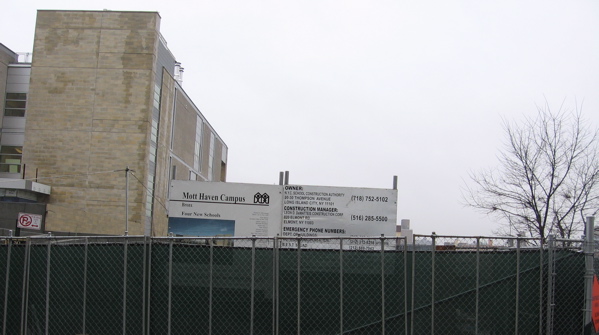
In preparation for the opening this fall
of the new Mott Haven school campus in The Bronx, New York, CPEO has
prepared this Community Guide to provide background on the site, as
well as information for any community member who wishes to consult the
primary documents. The Guide is accompanied by a “Report Card” for
keeping track of the commitments made to the community while the school
was being constructed, as well as additional tasks recommended by CPEO
but not agreed to by the agencies.
by Lenny Siegel
March, 2010
Nearly thirty years ago a TCE plume, at
least seven miles long, was discovered emanating from a Motorola
semiconductor plant in Phoenix, Arizona. While U.S. EPA Region 9
undertook vapor intrusion investigations at similar sites in Mountain
View, California starting 2002, the neighborhood nearest the Motorola
plant was left under the jurisdiction of the Arizona Department of
Environmental Quality. No vapor intrusion studies were initiated at the
Phoenix site until 2010, when EPA Region 9 stepped in.
by Lenny Siegel
October, 2009
On Columbus Day, 2009 workers at the Atlantic Highlands Elementary School,
in Atlantic Highlands, New Jersey put the finishing touches on 19
subslab depressurization systems to prevent toxic vapors from entering
the school building from below. The installation culminates several
months of discussion, and it demonstrates how an engaged, persistent
community can get health-protective results.
by Bob Hersh
October, 2009
Faced with surplus land and weak markets
for real estate development, cities such as Indianapolis have begun to
consider a strategy of “re-localization,” where developing local food
systems can help extract value from the city’s portfolio of vacant and
abandoned properties. This policy brief considers why urban agriculture
can be a means to build community assets, particular in poorer,
inner-city neighborhoods. It describes how and why in Indianapolis this
strategy has begun to emerge, how urban farming policies attempt to
build on the city’s community garden efforts, and what challenges
community groups, advocates for urban farming, and local government
officials have encountered.
by Lenny Siegel
August, 2009
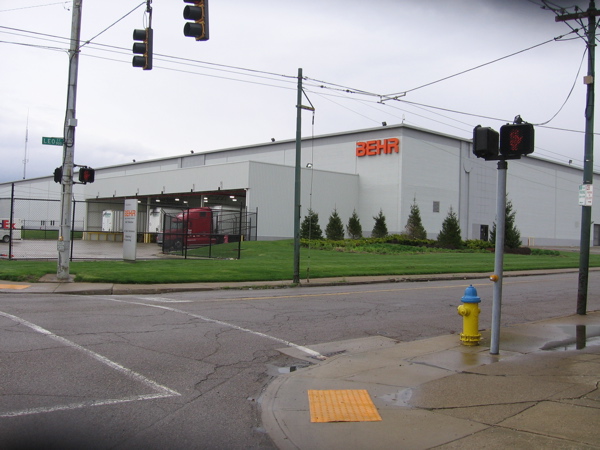
The 500-home McCook Field neighborhood in
Dayton, Ohio is a major vapor intrusion site, where TCE sampling inside
some homes has actually exceeded the emergency action level. U.S. EPA
initiated a emergency response in 2006, and it added the site to the
National Priorities List in 2009. Continuing activity is threatened by
the bankruptcy of auto-manufacturer Chrysler, the responsible party to
take action first, but EPA recently issued an order to Behr Thermal
Systems, the current plant operator. Site neighbors, organized into
BVOCAL, are insisting on a comprehensive response and perodic sampling
to ensure that their homes are safe.
by Peter Strauss and Lenny Siegel
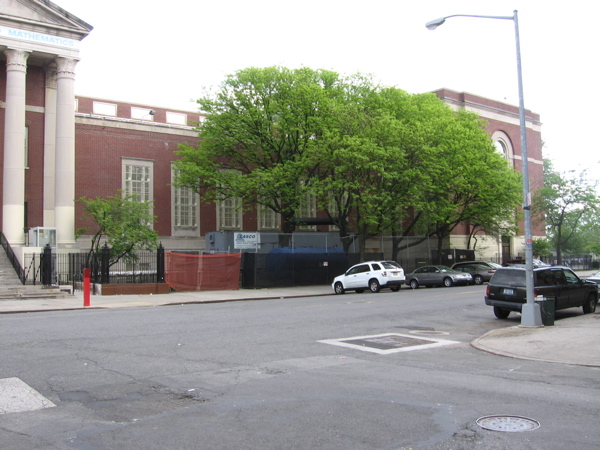
June, 2009
The New York City school building on the
East 115th Street Manufactured Gas Plant site is currently home to the
Manhattan Center for Science and Mathematics (MCSM) and the Isaac
Newton Junior High School of Science and Math. Though most of the Gas
Plant was demolished 70 years ago, some structures and residual
contamination remain on site. Consolidated Edison (Con Ed), which
purchased the property from the original plant operator, and the New
York State Department of Environmental Conservation (DEC) have proposed
a six-part remedy. The MCSM Parents’ Association retained the Center
for Public Environmental Oversight to review the site documents and
prepare comments on the proposed cleanup.
by Lenny Siegel
May, 2009
The Gowanus Canal stretches about a mile
and a half through western Brooklyn, terminating at the Gowanus Creek
arm of the New York Harbor. Despite opposition from New York City
officials and developers, EPA’s proposal to list the Canal on the
“Superfund” National Priorities List is a no-brainer because only the
Canal, not the adjacent land, is proposed for listing, and because
development is currently proposed for only a very small stretch of the
Canal waterfront.
by Lenny Siegel
March, 2009
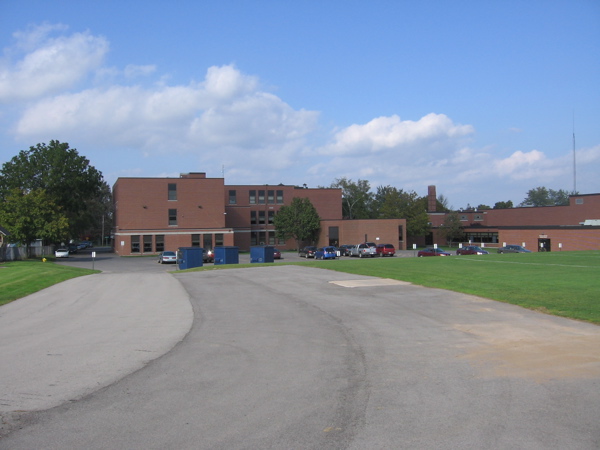
Vapor intrusion is probably not a current source of exposure at the Roy-Hart
schools in Middleport, New York. It is not clear, however, where the
TCE vapor is coming from. The data are not strong enough, consistent
enough, or dense enough to provide certainty that school occupants are
not and will not be exposed to unsafe levels of TCE. A long-term site
management plan is called for.
by Lenny Siegel
February, 2009
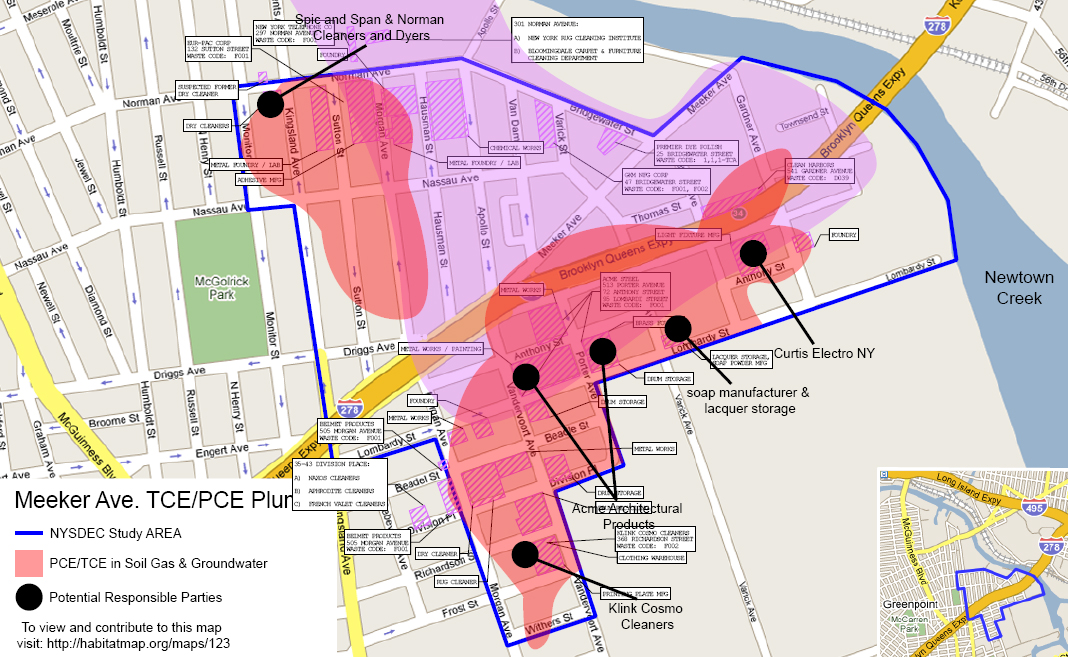
New York State’s environmental agencies have been conducting high-profile
vapor intrusion responses upstate, but little has been reported about
vapor intrusion in New York City, where about 42 percent of the state’s
population lives. However, the state’s two-year-old investigation in
Brooklyn’s Greenpoint district suggests that there are few vapor
intrusion sites in the City only because no one has looked.
by Lenny Siegel
February, 2009
The 57-acre CTS Asheville site on Mills Gap Road in Skyland, Buncombe
County, North Carolina (just outside of Asheville), is a prime example
of a hazardous waste site where the problem slipped through the cracks
of the regulatory system. Large quantities of trichloroethylene (TCE) and other contaminants were
released into the environment from the
1950s through the 1980s, and residents reported serious health
consequences—that they believe are connected with toxic exposures—at
least as early as 1990. In the early 2000s, new housing was built on a
portion of the original property. However, no cleanup actions were
taken until 2006. Since then, investigation has accelerated, but the
response still appears fragmented and insufficient.
by Lenny Siegel & Peter Strauss
March, 2008
CPEO comments on the January 2008 draft Site Management Plan (SMP) for the
Mott Haven school campus, now under construction in the South Bronx.
The School Construction Authority cleanup of this site is robust, and
with proper site management, the students, teachers, and others who
will occupy this site will not be at risk of unacceptable environmental
exposures. While the draft SMP
contains many of the elements necessary to guide long-term site
management, we find that it is incomplete. The chronic health
risks from exposure to contaminants on site must be taken seriously.
The time to ensure the long-term safety of the site is now. The
officials and consultants who design and oversee both cleanup and
construction will be long gone in decades, but the need to manage the
site will continue.
by Lenny Siegel
August, 2007
by Rosa Hart Burenstine
July, 2007
On May 26, 2007 Baltimore environmental justice leader Rosa Hart Burenstine
took Lenny Siegel on a tour of East Baltimore. Led by the
bioscience-based East Baltimore Redevelopment Project (EBRP), this
depopulated area appears to be on the verge of rebirth. Burenstine
describes the promise she sees in the EBRP partnership. Siegel suggests
that existing housing stock is ready for rehabilitation.
by Lenny Siegel
August, 2007
From July 31 through August 3, 2007, Lenny Siegel visited five vapor
intrusion sites in New York state. He found that redevelopment does not
generally provide the resources to support the cleanup of plumes
migrating under neighboring homes, and that many industrial properties
that are the sources of such plumes—technically brownfields—are being
reused without redevelopment. Impacted community members are seeking
more information on how vapor intrusion is evaluated, but even without
“technical expertise” many offer important insights that deserve
attention from the experts.
by Bob Hersh
July, 2007
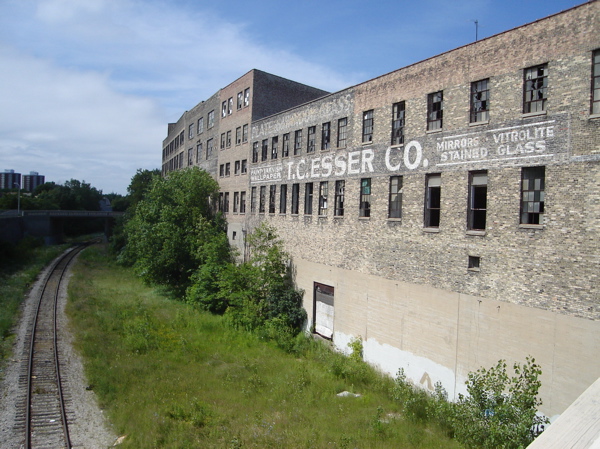
The 30th Street industrial corridor in Milwaukee, Wisconsin is an example of how area-wide
brownfields redevelopment strategies can be designed to achieve both
community benefits and regional planning objectives. City and state
officials, local non-profits, and residents’ associations are
attempting to use brownfields cleanup and redevelopment as a core part
of an area-wide initiative in one of the most disadvantaged sections of
the city. Located in the north central part of Milwaukee, the corridor
runs five miles from north to south and is roughly a quarter of a mile
wide. It is bisected by rail lines, along which scores of factories
were constructed at the end of the 19th century.
by Lenny Siegel
June, 2007
On May 29, 2007 Lenny Siegel
visited two major vapor intrusion sites on the Connecticut coast, the
Raymark Superfund site in Stratford and the Milford Condominiums, in
nearby Milford. Connecticut was one of the first states to actively
investigate vapor intrusion, and it appears to have a strong,
protective program. In his brief visit he learned a number of practical
lessons.
by Lenny Siegel
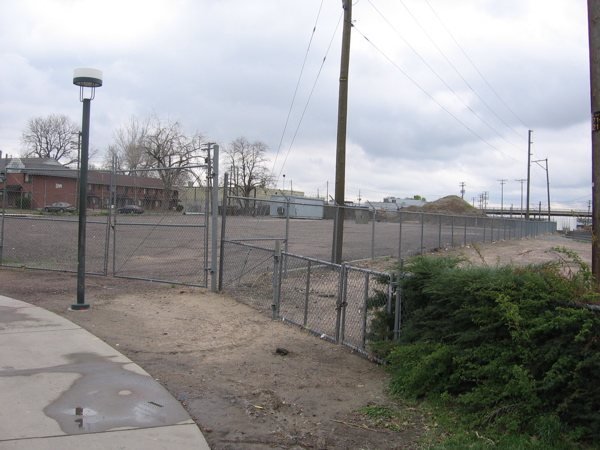
May, 2007
A community coalition has
proposed a mixed-used development on a three-acre site adjacent to the
10th and Osage Light Rail Station in Denver. Their proposal calls for a
year-round public marketplace, emphasizing work-sell activity and
drawing upon the neighborhood’s cultural heritage. The City and County
of Denver has applied for a U.S. EPA Brownfields grant to help pay for
the removal of contaminated soil, with the apparent objective of
advancing the community vision for the property.
by Lenny Siegel
February, 2007
The tools for evaluating,
mitigating, and remediating vapor intrusion—the upward migration of
toxic vapors from the subsurface—at sites with existing buildings are
well proven and relatively easy to learn about. Nationally, however,
much less thought has gone into determining when and where it is
appropriate to develop or redevelop properties with underlying
contamination with volatile compounds. Douglas, Michigan, which I
visited on February 12, 2007, is a good example. A developer plans to
build 64 single-family homes and 78 triplex units on about 15 acres of
Douglas’ former West Shore Golf course. A plume of TCE and other
pollutants flows from the former Chase Manufacturing plant, just to the
southeast, to Wick’s creek, a tributary of Kalamazoo Lake that bisects
the development parcel.
by Lenny Siegel
February, 2007
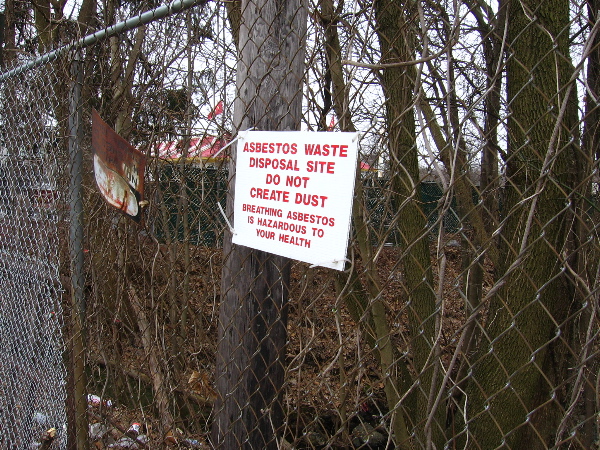
The 38-acre BoRit Asbestos
Piles site in Ambler, Pennsylvania, received asbestos production wastes
for decades. It consists of a potential development parcel, a
reservoir/wildlife area, and a closed neighborhood park, U.S. EPA, in
partnership with the Pennsylvania Department of Environmental
Protection, is in the midst of removal action, which thus far has
including sampling of soil, sediment, surface water, and nearby air.
Local activists are concerned that soil disturbance from the proposed
development would release chrysotile into the neighborhood. Indeed,
capping under Superfund regulations, as conducted as the nearby Ambler
Asbestos piles site more than a decade ago, seems like a viable
approach.
by Lenny Siegel & Peter Strauss
January, 2007
New York City is building four
new schools on a former Bronx railyard contaminated with semi-volatile
organic compounds, gasoline-related contaminants, chlorinated solvents,
and other pollutants. On behalf of the Bronx Committee for Toxic Free
Schools, New York Lawyers for the Public Interest (NYLPI) sought and
received funding from the New York City School Construction Authority
(SCA) for an independent review of its plans for cleanup and
construction. NYLPI contracted with CPEO to conduct the review, and
CPEO executive director Lenny Siegel visited New York January 3-5,
2007. CPEO's report, authored by Siegel and Peter M. Strauss, found
that the investigation and remedial planning for the Mott Haven site
have been conducted professionally, and furthermore, that the SCA has
committed to spending substantial resources on remedial action.
However, CPEO recommended that the SCA excavate additional toxic
hotspots, and it proposed that long-term management of the site be
strengthened to protect better the health and well-being of
schoolchildren and others who will be using the site, as well as the
occupants of two, existing adjacent schools.
by Lenny Siegel
October, 2006
On September 29, 2006 I
visited a number of brownfield sites in Providence, Rhode Island. My
host was Steve Fischbach, an attorney with Rhode Island Legal Services
(RILS). Below I describe the two school sites we visited, the occupied
Pell Complex and the un-named high school under construction at the
former Gorham Silver property. I have added information about the
Gorham site from neighborhood activist Robert Dorr as well as from a
draft Health Consultation recently released by the federal Agency for
Toxic Substances and Disease Registry (ATSDR).
by Lenny Siegel
September, 2006
On September 28, 2006, I
visited New Bedford, Massachusetts. My principal host was John "Buddy"
Andrade, of the Old Bedford Village Community Development Corporation.
One of the oldest European settlements in the United States, New
Bedford originally gained renown as home to whaling fleets. Later, its
textile mills played a major part in the American industrial
revolution. Today it is the number one fishing port in the continental
United States.
by Lenny Siegel
September, 2006
On September 7, 2006, I
visited the Gates Rubber redevelopment site just south of downtown
Denver. The 80-acre site, which straddles Broadway, produced belts,
hoses, and even tires for the automobile industry. Established in 1911,
in its heyday it provided over 6,000 workers a living wage and strong
benefits. Once the nation's sixth largest rubber company, Gates began
downsizing in the 1980s, as it moved operations overseas. It closed
permanently in 1995.
by Lenny Siegel
Summer, 2006
On July 18, 2006, I visited
Playa Vista, at nearly 1,100 acres one of the largest developments in
the history of Los Angeles County, California. My host was activist
Patricia McPherson, of the Grassroots Coalition ( http://www.grassrootscoalition.org).
McPherson and many others, including my parents, have opposed and/or
criticized Playa Vista for its impact on one of the last remaining
wetlands areas in Los Angeles, the massive seepage of methane gas from
underground, and other problems, including toxic contamination. by Lenny Siegel
June, 2006
On June 9, 2006, I re-visited the Morris Canal area in Jersey City, New
Jersey, and met with June Jones-Hawkins, leader of the Morris Canal
Redevelopment Area Community Development Corporation (MCRACDC). I first
visited the area in 2002 as part of joint research project on local
government and Brownfields, in which CPEO worked with the International
City/County Management Association. In 2004 CPEO teamed with the city
of Jersey City to hold a workshop on "Community-Led Brownfields
Revitalization.
by Lenny Siegel
May, 2006
Disposal Gardens, in Torrance,
California, is one of the names for a subdivision built on former sand
and gravel pits which received liquid oil wastes and reportedly
received military solid wastes as well. The site is adjacent to the
toxic Palos Verdes Landfill. Since construction, the subdivision has
been plagued with collapsing hillsides, cracking foundations and
driveways, and discolored water bubbling up into basements and garages.
by Lenny Siegel
March, 2006
The Brisbane Baylands comprises
several hundred acres between the U.S. 101 freeway and the developed
portion of the city. Roughly half is a former municipal landfill that
operated in the pre-regulation area, from 1932-1967. Most of the
remainder was a major Southern Pacific railyard, including tracks, a
roundhouse, and shops. The City of Brisbane and a private developer are
planning for a major, mixed-use, transit-oriented redevelopment of the
area. Concerned residents successfully petitioned for a Community
Advisory Group.
by Lenny Siegel
March, 2006
These two neighborhoods contain
a mix of homes, active businesses, abandoned industrial structures and
vacant lots. Northern Liberties, at least, is on the rebound, but
community members are concerned than contamination may be capped, not
treated or removed, and that residents are exposed to hazardous dirt
and debris.
by Lenny Siegel
March 14, 2006
The Soundview Educational
Campus is a high school building without playing fields or plazas,
built on the abandoned Loral plant in the Bronx, New York. According to
local activists, the school was built without adequate environmental
investigation, and little is being done to address the larger site
around it.
by Lenny Siegel
March 14, 2006
A groundwater plume of
trichlorethylene and trichloroethane lies under nearly 150 homes in
Hopewell Junction, New York. Many homes have water filters on their
private water supplies now, and many of the same residences have
subslab depressurization systems to mitigate vapor intrusion. A small
amount of new development is occurring within the affected area.
by Lenny Siegel
March 14, 2006
Remediation, in the form of off-site disposal of hazardous wastes and on-site
consolidation of other wastes, is expected to make this 50-acre site
ready for development within the next year. The owner, Stauffer
chemical, has promised to donate the land to the Newburgh Community
Action Committee, which is seeking partners to help turn it into open
space and an Eco-Industrial Park.
Robert Hersh and Lenny Siegel
August 29, 2012
Based upon its field studies,
the Center for Public Environmental Oversight (CPEO) submitted comments
on U.S. EPA’s Draft of Best Practices
for Siting Solar Photovoltaics on Municipal Solid Waste Landfills.
We believe the Best Practices document would benefit from an added
emphasis on community engagement, and the document should be written to
help communities be on the same page as companies and agencies.
Communities should not be seen as obstacles to solar power on
landfills. Just as with remediation, projects are likely to end up
better and have an easier time winning approval if communities are
engaged from the start.
Robert Hersh
June 2012
Despite the health and
community benefits of urban gardening—fresh and nutritious food,
physical activity, more attractive neighborhoods—growing food in urban
soils poses potential risks. In older urban neighborhoods, before
zoning segregated different land uses, housing for workers was often
built within walking distance of chrome plating shops, leather tanners,
mills, and so on. For decades, toxic emissions from these factories,
such as cancer-causing hexavalent chromium, were carried in the air and
deposited on urban surfaces and in the soil. However, to develop safe
gardening strategies, prospective community gardeners can assess
environmental conditions on their plots by consulting historical
records, maps, and enviromental data bases, as well as interviewing
neighbors.
Robert Hersh
November, 2009
New Jersey’s
school building program and its efforts to improve public education for
poor children has been one of the most ambitious in the nation. It has
dealt head on with the lack of coordination between school districts
and municipalities, school funding for impoverished communities,
aligning economic development concerns with community centered schools,
identifying sites and building schools in densely populated
neighborhoods, and addressing school site contamination. With such an
ambitious and large-scale program, it is not surprising that New Jersey
has had it share of successes and failures.
Robert Hersh
October, 2009
Faced with
surplus land and weak markets for real estate development, cities such
as Indianapolis have begun to consider a strategy of “re-localization,”
where developing local food systems can help extract value from the
city’s portfolio of vacant and abandoned properties. This policy brief
considers why urban agriculture can be a means to build community
assets, particular in poorer, inner-city neighborhoods. It describes
how and why in Indianapolis this strategy has begun to emerge, how
urban farming policies attempt to build on the city’s community garden
efforts, and what challenges community groups, advocates for urban
farming, and local government officials have encountered.
Robert Hersh
July, 2007
In low-income and
minority neighborhoods, young people are using brownfields as a means
to organize local residents and to encourage youth political
engagement. This Brief highlights the Toxic Soil Busters (TSB), a group
of high school students in Worcester, Massachusetts that has developed
the expertise and resources to test soils for lead in backyards and in
community gardens. Not only are the students helping local residents
from the city's poorest neighborhoods protect themselves from lead in
soils, but they are also conducting long-term phytoremediation
experiments.
Robert Hersh
April, 2007
For
neighborhood groups, addressing brownfield clusters is a complex
undertaking. The properties are often a mixed bag; they can range from
those in public hands acquired through tax delinquency to privately
held properties subject to substantial tax lien. They may also include
parcels where owners, concerned about liability for any cleanup, have
chosen to mothball their properties to avoid regulatory scrutiny.
Perhaps even more daunting are the institutional demands that a
community-based organization faces when it attempts to broaden its
mission and rebuild blighted neighborhoods. This CPEO brownfields brief
discusses how community land trusts (CLTs) have addressed the
challenges and, more specifically, how they have been used as a vehicle
to revitalize brownfields.
Lenny Siegel and Robert Hersh
December, 2006
Despite the growing
significance of affordable housing, schools, and park projects in the
brownfields context, there is little consensus on where, when, and how
it is appropriate to build these community sanctioned uses on
contaminated properties. The question is not simply a technical matter
of how clean is clean. The larger issue is how should community-based
redevelopment efforts balance the relationship between the need for
streamlined, less costly remediation and environmental protection in
the long term. What are the justifications for these tradeoffs and how
should these decisions be made? And if bargaining in brownfields
revitalization becomes more pervasive as communities attempt to
transform contaminated properties into desirable public uses— schools,
parks, and affordable housing—how should community members advocate for
the public interest in preserving more stringent environmental
standards and maintaining adequate controls over residual contamination?
by Lenny Siegel
October, 2005
The recovery of Gulf Coast
areas devastated by hurricanes Katrina and Rita, in the late summer of
2005, will be the largest reconstruction project in U.S. history.
Evidence thus far shows that many impacted areas, particularly in New
Orleans, are contaminated. Pollutants include industrial chemicals,
petroleum and other hazardous substances from cars and other common
products, and biological wastes. Thus, the Louisiana-Mississippi Gulf
Coast has become the nation’s largest “Brownfield.”
Revitalizing these areas raises many of the same issues that have arisen at smaller Brownfield sites across the country.
- Health Risk and Public Involvement
- Redevelopment and Gentrification
- Worker Training and Local Hiring
- Debris Removal
by Lenny Siegel
August, 2005
On August 26, 2004, U.S. EPA proposed a
new rule, “Standards and Practices for All Appropriate
Inquiries.” Required by the January 2002 “Brownfields
Amendments,” when finalized this rule is expected to become the
national standard for conducting “All Appropriate Inquiries,” a process
commonly referred to as Phase One Environmental Site Assessment. ASTM
(formerly known as the American Society for Testing and Materials),
which for many years has provided the industry standards for
environmental site assessments, is revising its “Standard Practice for
Environmental Site Assessment” (E–1527) to be compatible with the new
EPA standard. EPA based its proposal on the Brownfields Amendments and
the work of a Negotiated Rulemaking committee, 25 people representing
diverse interests who met several times in 2003 to develop the rule’s
language.
by Lenny Siegel
August, 2005
Vapor
intrusion, the emerging pathway now being investigated at sites across
the country, is one of the most significant obstacles to the safe use
of contaminated property. The science and regulatory framework for
vapor intrusion has been developed for existing structures. Only
recently has anyone begun to address redevelopment at sites likely to
experience vapor intrusion
During the past decade, the primary responsibility for
addressing contaminated sites—known as brownfields—has shifted from the EPA
to state regulatory agencies and local governments. Recent federal
legislation, the "Small Business Liability Relief and Brownfields
Revitalization Act," acknowledges this change. The new law increases
funding for state cleanup programs and limits the authority of EPA to
take enforcement actions at sites cleaned up and certified by state
programs.
This decentralization of brownfields policies has made extraordinary, and at
times painful, demands on state regulatory agencies to enlarge their
mission from a traditional focus on environmental protection and risk
reduction at brownfield sites to one that seeks to incorporate into
rules and procedures other important social goals, such as economic
development, efficient infrastructure use, and job creation. For many
brownfields practitioners, however, this array of policies makes
brownfields attractive because it provides opportunities for creative
negotiations, deal-making, and the possibility of reforming regulatory
practices.
The
brownfields literature has little to say about how such transformations
occur, or how regulatory agencies and policy entrepreneurs respond
strategically to the political preferences of state legislatures; we
know relatively little in detail about how new brownfields policies
emerge at the state level, what groups or political interests push them
forward, how these negotiations are structured, what incentives are
valued by different parties, and under what conditions these
inducements find favor and are actually implemented at the local level.
These
questions are addressed in three new reports issued jointly by Kris
Wernstedt of Resources for the Future (RFF) and Robert Hersh of the
Center for Public Environmental Oversight (CPEO). In their study, which
was funded by the Andrew W. Mellon Foundation, Wernstedt and Hersh rely
on extensive interviews, document review, case studies, and a survey,
to examine the emergence and implementation of brownfields policies in
Wisconsin, one of the most innovative states in the country in
brownfields.
The
first paper, The Brownfield Bargain: Negotiating Site Cleanup Policies
in Wisconsin, is an historical analysis of the politics and process of
brownfield development in the state during the past two decades. The
second paper, Brownfield Redevelopment in Wisconsin: Program, Citywide
and Site Level Studies, relies primarily on case studies to examine
how the legislative and administrative reforms of the state's
brownfield program influenced the behavior and choices of local
government officials and private sector participants. And in the final
paper, Brownfield Redevelopment in Wisconsin: A Survey of the Field, the authors report on a survey of some 250 brownfield stakeholders,
including elected officials, staff from economic and community
development agencies, attorneys, developers, and representatives from
non- profit organizations. The paper analyzes how different groups
perceive the environmental and economic benefits of brownfields as well
as the principal barriers to more effective brownfields redevelopment.
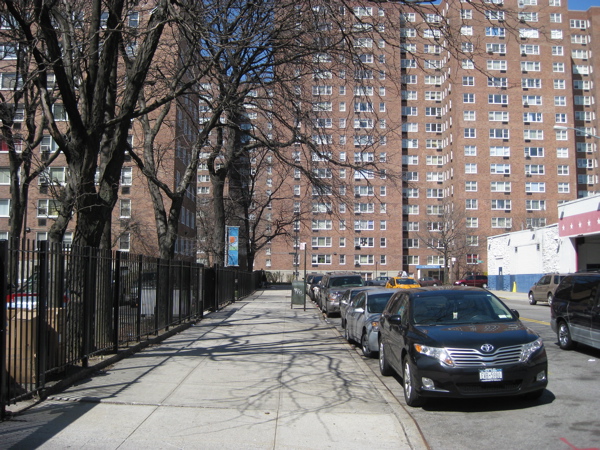
|
 |